KYC, AML and sanctions
Triage the alert, screen the counterparty, draft the case.
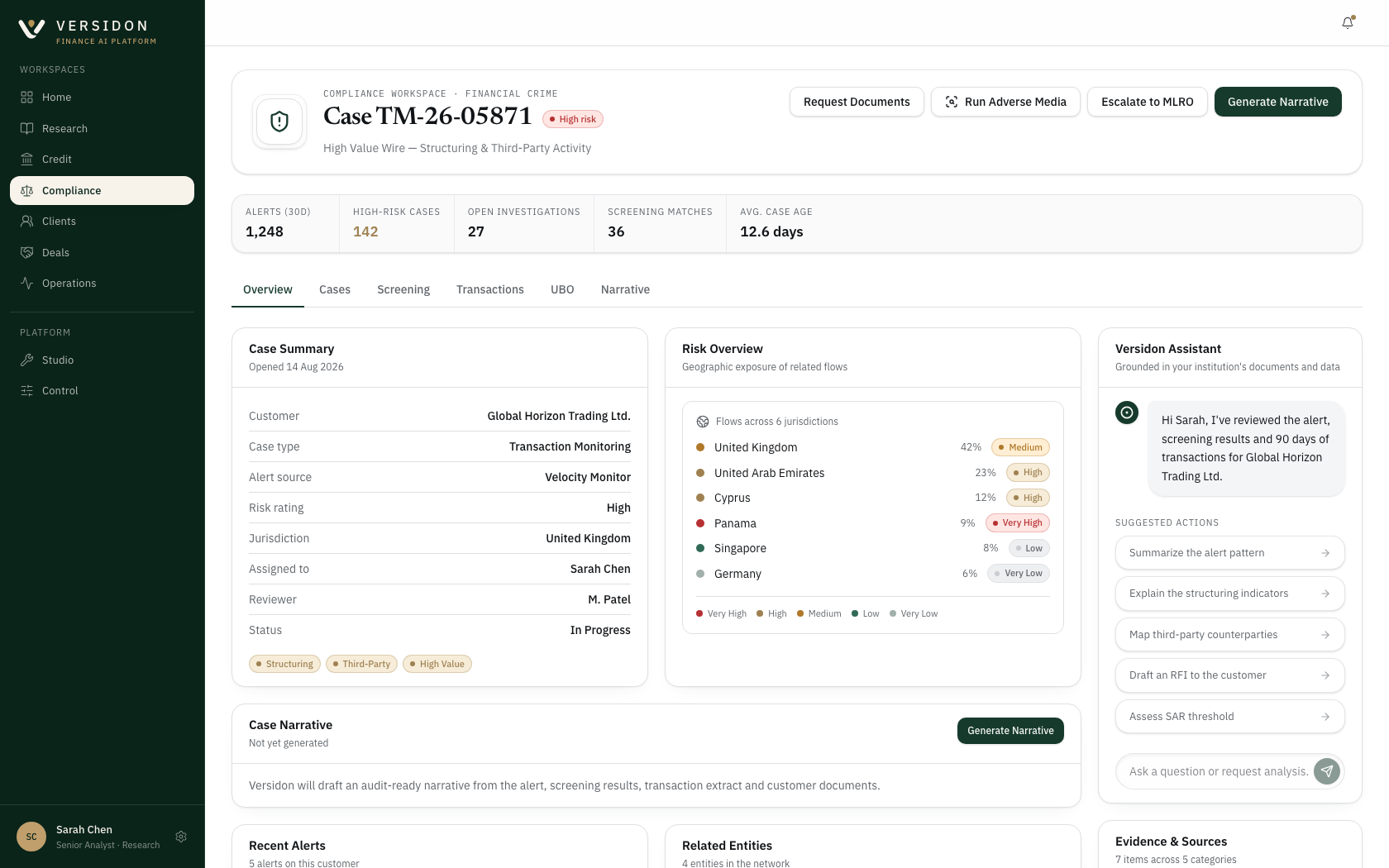
Compliance works the transaction-monitoring queue, screens against sanctions and adverse media, assembles entity and counterparty risk, and drafts a case narrative that recommends MLRO escalation for SAR consideration. It recommends. It does not file.
How it works
Triage that shows its reasoning to the person who signs.
The agent takes an alert, gathers what is known about the entity and its counterparties, screens against your sanctions and adverse-media sources, and writes the narrative an investigator would write — with each assertion attached to the record that supports it.
- 01
Triage the alert
Transaction-monitoring alerts are worked against the pattern that raised them, with the underlying activity assembled rather than described in the abstract.
- 02
Screen and assess
Sanctions and adverse-media screening runs against your configured sources. Each hit is presented with its match basis, so a false positive can be dismissed on the evidence.
- 03
Draft the case narrative
A narrative is drafted for review, recommending MLRO escalation for SAR consideration where the evidence supports it, and stating what remains unresolved where it does not.
What it produces
A case file, not a score.
A financial-crime decision has to survive examination. The output is a case file an examiner can read: what was checked, what was found, what was concluded and by whom.
Transaction-monitoring triage
Alerts worked in the queue with the activity that triggered them assembled in one place, and the disposition rationale recorded.
Sanctions screening
Screening against your configured lists, with the match basis shown so a dismissal is a documented judgement rather than a click.
Adverse-media screening
Media findings gathered and cited to the source article, with relevance to the entity stated rather than assumed.
Entity and counterparty risk
Risk assembled across the entity and the counterparties it transacts with, so a pattern that only appears across relationships is visible.
Drafted case narrative
A narrative written for MLRO review, recommending escalation for SAR consideration where the evidence supports it and naming what is unresolved where it does not.
Reviewable end to end
Every human and agent action lands in the same immutable log — actor, entity, workspace and timestamp — and is exportable for examination.
Where it stops
Versidon drafts. The MLRO decides.
The filing decision is a regulated judgement held by a named officer, and it stays there. Versidon prepares the case, recommends escalation and states the residual uncertainty. It does not file a report, close an alert on its own authority, or exit a relationship.
The narrative is drafted for the MLRO. The decision to file remains the MLRO's, and the record shows that it was.
Works with the rest of the platform
One record, one permission model, one audit trail.
Clients
Meeting packs, open-request tracking and cross-sell candidates drawn from the relationship record.
Exceptions and service levelsOperations
Exception queues with live SLAs, and release packs that stop at the authoriser rather than past them.
Governance and auditControl
Model registry, agent registry, entitlements and an immutable event log covering every human and agent action.