Equity and credit research
A company brief you can trace back to the filing.
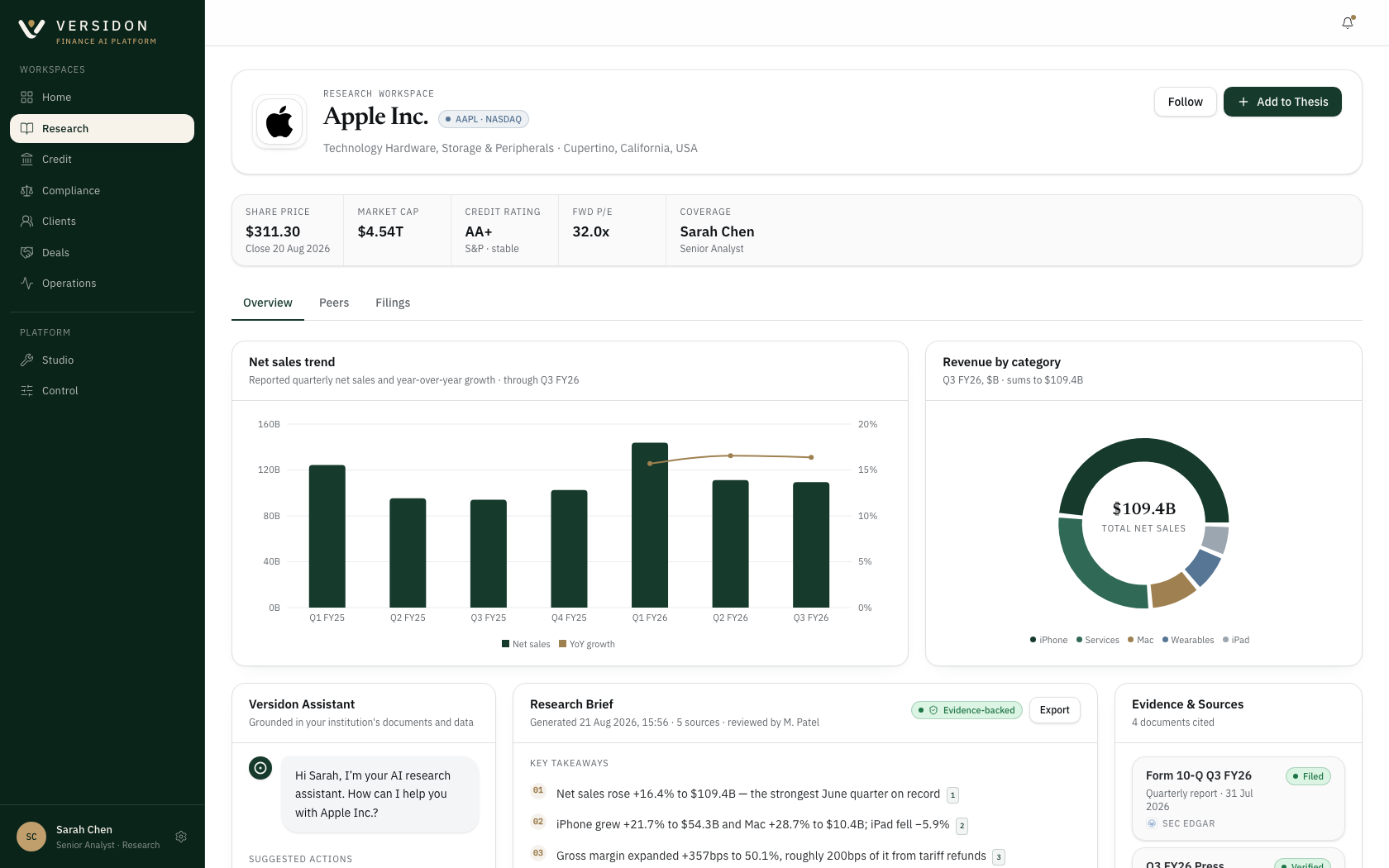
Research reads the filings, the transcripts and the notes your team has already written, then assembles a brief in your house format. Every takeaway carries a citation chip. Open it and you land on the passage it came from, with its page reference.
How it works
It reads the source, not a summary of the source.
The agent works from the documents in your research file — annual and interim filings, earnings transcripts, broker material you are licensed to hold, and the internal notes your analysts keep. It extracts the figures, reconciles them across periods, and writes the brief with the citation attached at the point the claim is made.
- 01
Assemble the file
Filings, transcripts and internal notes for the name are gathered into one working file. Entitlements are applied at query time, so nothing an analyst cannot open in the source system can reach the brief.
- 02
Extract and reconcile
Reported figures are pulled into a financial summary across periods and checked against each other. Where two sources disagree, the brief says so rather than picking one.
- 03
Draft with citations attached
The brief is written into the same file your analysts work in. Each takeaway carries a citation chip; clicking it opens the exact passage with its page reference.
What it produces
A brief, its numbers, and the evidence underneath both.
The output is the document an analyst would have written, with the source layer left intact rather than discarded once the sentence was formed.
Cited takeaways
Every takeaway carries a citation chip. Clicking it opens the exact passage with its page reference, so a reviewer checks the source rather than trusting the summary.
Financial summary tables
Reported figures laid out across periods, with the basis stated and restatements flagged where the filings restate them.
Revenue-trend and segment charts
Trend and segment breakdowns built from the extracted figures, so the chart and the table cannot drift apart.
Peer comparison
A comparison set you choose, on a consistent basis, with each line traceable to the filing it was drawn from.
Drafted into your file
Blocks the agent writes are marked and attributed until an analyst accepts them. Nothing enters the record as human-authored by default.
Your notes count as evidence
Internal research notes sit alongside the filings as citable sources, so institutional knowledge is not lost the moment a brief is written.
Where it stops
It does not tell you what to think.
Research produces analysis, not a recommendation with a house view attached. Where the evidence is thin or the sources conflict, the brief names the gap instead of smoothing it over. The judgement, the rating and the published view stay with the analyst who signs them.
Analysis you can trace to a filing, not a model's recollection of one.
Works with the rest of the platform
One record, one permission model, one audit trail.
Credit
Spreading, covenant testing and a drafted credit memo that names its exceptions in the first paragraph.
Diligence and executionDeals
Workstream trackers, request logs and comps that reconcile to the model beside them.
Governance and auditControl
Model registry, agent registry, entitlements and an immutable event log covering every human and agent action.